Do I need to upgrade my electrical panel before installing a home EV charger?
Not always. A panel upgrade depends on the charger requirements, the capacity and condition of the existing electrical service, available breaker space, other major electrical loads, and the planned circuit route. The right first step is an on-site electrical evaluation before equipment or panel work is recommended.
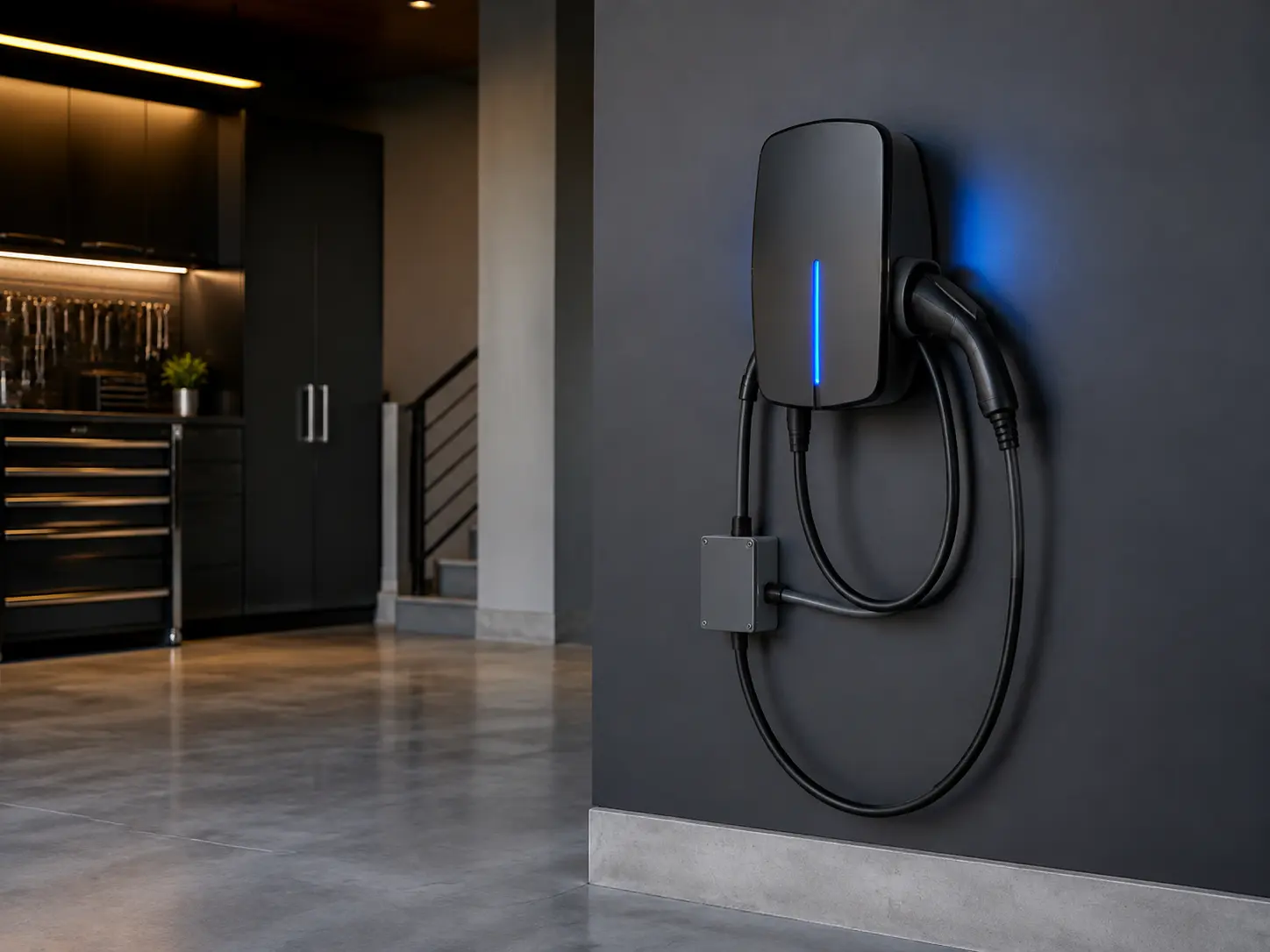
The charger is only one part of the installation.
A home-charging plan has to connect the vehicle and charger requirements to the property that will supply the power. That means looking beyond the charger brand and checking the panel, proposed circuit, parking position, cable reach, and expected charging routine together.
What TrueGrid evaluates before making a recommendation
- The charger manufacturer's electrical requirements
- Existing service and panel capacity
- Available breaker space and panel condition
- Other major loads already served by the property
- The distance and practical route from the panel to the charger
- Indoor or outdoor placement and how the charging cable will be used
Level 1 and Level 2: what changes electrically
The U.S. Department of Energy identifies Level 1 as 120-volt charging and Level 2 as 240-volt charging. The final circuit and equipment requirements must come from the selected charger and the property evaluation.
| Planning point | Level 1 | Level 2 |
|---|---|---|
| Typical supply | 120-volt outlet | 240-volt circuit or compatible outlet |
| Charging pace | Slower; may suit lower daily mileage | Faster; commonly chosen for regular home charging |
| Electrical review | Confirm the outlet and circuit are appropriate | Confirm panel capacity, breaker space, circuit size, route, and charger requirements |
| Panel upgrade automatically required? | No | No—the existing system must be evaluated first |
A practical EV-charger planning process
Confirm the vehicle and charger
Share the vehicle, charger model, installation instructions, and preferred charging location.
Evaluate the property
Review the panel, existing loads, available space, circuit route, and the conditions at the proposed charger location.
Explain the appropriate scope
Separate the charger installation from any circuit, panel, or routing work the property actually needs.
What affects EV-charger installation cost?
TrueGrid does not publish an unsupported fixed price because the installation scope changes from property to property. These are the main factors that shape an estimate:
- Charger type and manufacturer requirements
- Available capacity and breaker space
- Circuit length and routing difficulty
- Wall, attic, garage, or exterior access
- Hardwired versus compatible receptacle installation
- Whether panel or service work is actually required
Frequently asked questions
Does every Level 2 EV charger require a panel upgrade?+
No. Some properties have suitable capacity and breaker space; others need additional work. The charger requirements and the existing electrical system must be evaluated together.
Can TrueGrid install a charger I already purchased?+
Call with the charger make and model. TrueGrid will confirm whether the equipment and requested installation fit its current services, the property, and current availability.
Should I buy the charger before calling an electrician?+
You can begin with a vehicle or charger preference, but an electrical evaluation before purchase can help identify capacity, placement, and circuit considerations that may affect the final choice.
What information should I have ready?+
Share the vehicle and charger model, photos of the electrical panel and parking area if available, the preferred charger location, and the property address.
Technical references
First-party and manufacturer information used to support the general planning guidance on this page:
- Electric Vehicle Charging StationsU.S. Department of Energy Alternative Fuels Data Center
- Electric Vehicle ChargersENERGY STAR