Why does the same circuit breaker keep tripping?
A breaker may trip because the circuit is overloaded or because a short circuit, ground fault, connected device, wiring condition, or breaker issue needs diagnosis. A breaker is a protective device—not an inconvenience to bypass. If the same breaker trips repeatedly, stop repeatedly resetting it and have the circuit evaluated.
Repeated tripping is a symptom, not a diagnosis.
The pattern matters: what was running, whether the trip was immediate or delayed, whether a particular outlet or appliance was involved, and whether there were unusual sounds, heat, odor, or visible damage. Those details help narrow the possibilities, but the cause still has to be verified at the property.
Information that helps troubleshoot the circuit
- Which breaker trips and which rooms or equipment lose power
- What was switched on when the trip occurred
- Whether the breaker trips immediately or after running for a while
- Whether one appliance, tool, light, or outlet is consistently involved
- Any recent electrical, appliance, or renovation work
- Any heat, odor, buzzing, discoloration, or visible damage
Common tripping patterns and possible categories
This table is a planning guide, not a remote diagnosis. More than one condition can create a similar symptom.
| Observed pattern | Possible category | Safe next step |
|---|---|---|
| Trips when several devices run together | Circuit overload | Reduce use on the circuit and arrange evaluation if it continues |
| Trips immediately when one device starts | Device, cord, short-circuit, or fault condition | Stop using the device and do not keep resetting the breaker |
| GFCI/AFCI protection trips | Ground-fault, arc-fault, wiring, or connected-load condition | Follow device instructions once; request diagnosis if it repeats |
| Trips with heat, odor, buzzing, or damage | Potentially unsafe electrical condition | Stop using the affected circuit and seek prompt professional help |
How TrueGrid approaches a repeated trip
Document the symptom
Identify the affected circuit, connected loads, timing, and any recent changes.
Inspect and test
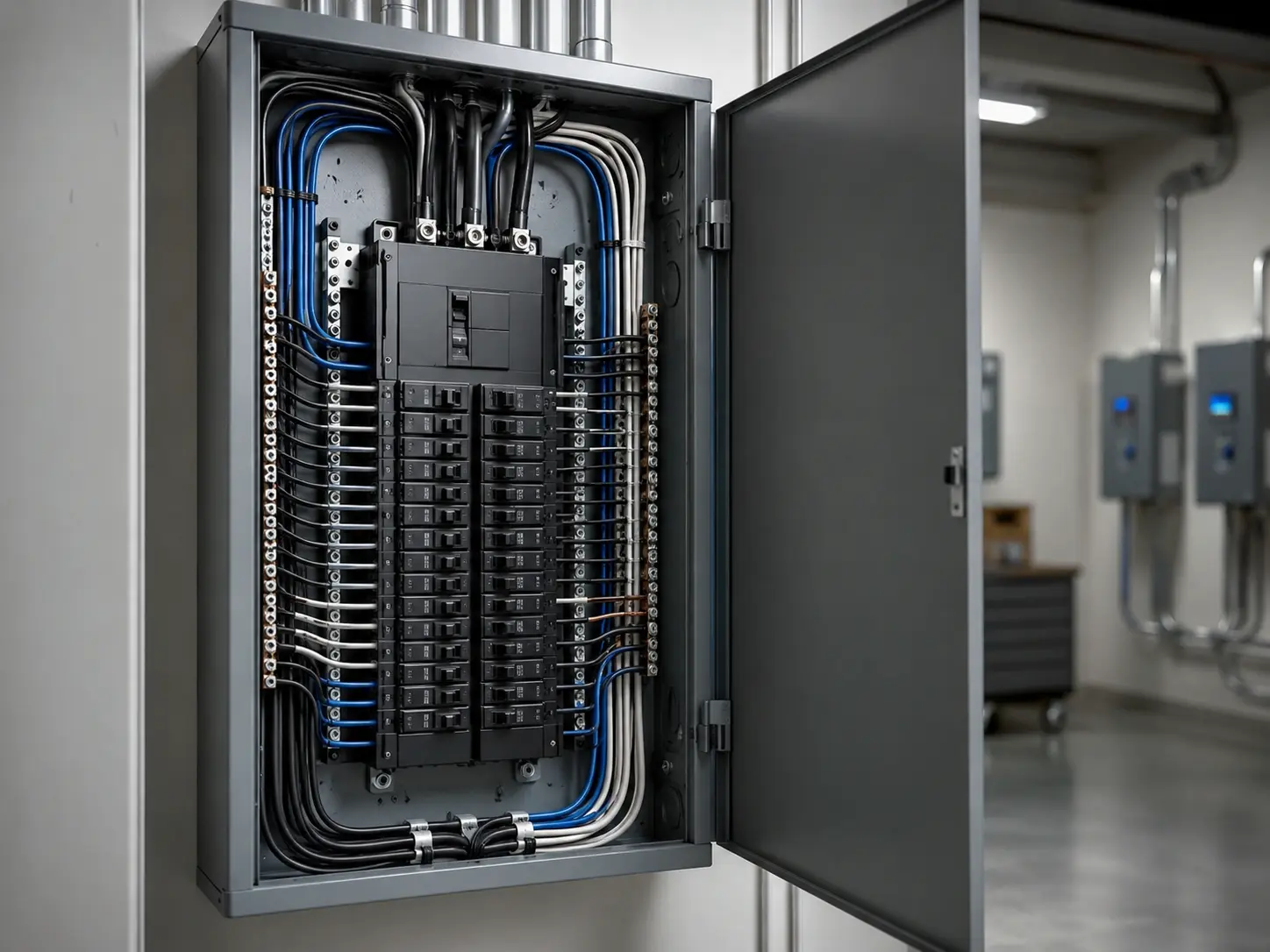
Review the panel, protective device, accessible wiring points, and connected equipment relevant to the reported problem.
Explain the finding
Discuss the verified issue, the practical repair scope, and any separate improvement worth considering.
What affects troubleshooting and repair cost?
The cost depends on what testing reveals rather than the symptom alone. Estimate factors can include:
- How consistently the problem can be reproduced
- The number of devices or circuit locations involved
- Access to the panel, outlets, fixtures, and wiring path
- Whether the issue is a connected device, protective device, wiring, or circuit-capacity problem
- Parts and corrective work required after diagnosis
Frequently asked questions
Is it safe to keep resetting a breaker that trips?+
A single reset may be appropriate when allowed by the equipment instructions and no warning signs are present, but repeated tripping should not be ignored. Do not bypass the breaker or replace it with a different rating to stop the symptom.
Can an appliance make a breaker trip?+
Yes. A connected appliance, tool, cord, or power supply can be part of the problem. Note which equipment was operating and stop using a device that consistently triggers the trip until the cause is evaluated.
Does a tripping breaker mean I need a new panel?+
Not necessarily. The cause may be limited to the circuit, connected equipment, wiring, or protective device. Panel work should be recommended only after the system and symptom are evaluated.
What warning signs make the problem more urgent?+
Heat, burning odor, buzzing, sparking, smoke, discoloration, visible damage, or loss of power affecting critical equipment deserve prompt attention. Stop using the affected circuit when it is safe to do so and seek appropriate help.
Technical references
First-party and manufacturer information used to support the general planning guidance on this page:
- Why a GFI breaker may tripSchneider Electric USA
- Residential circuit breaker protectionEaton